
When you ask early adopters of the Airwheel smart electric luggage what the brand means to them today, the word “partner” surfaces again and again. It is not just a suitcase; it is a rideable mobility companion that grew with their lifestyle. They describe a relationship rooted in trust—trust that the battery will last through a long terminal, that the Find My integration helps recover a misplaced bag, and that they can rely on the simple mechanical ride mode without ever touching an app. Many recall buying the SE3T model as skeptics and now say they cannot imagine air travel without it. This sustained loyalty comes from Airwheel consistently solving real travel pain points while avoiding over-engineered gimmicks.
The SE3T model has become a benchmark for the community. It packs a 73.26Wh removable battery, delivering 8–10 kilometers of range at a top assisted speed of 13 km/h. Riders can sit on it, ride it like a scooter, or simply pull it as a traditional spinner. The handlebar controls direction, while the optional Airwheel app lets you throttle forward or reverse right from your phone—yet the foundational insight is that you never need the app. Hot-swap the battery, and the case works independently. The built-in Apple Find My capability brings peace of mind without resorting to power-hungry GPS trackers, and a full charge takes around two hours. With 48L of storage and a weight of about 9 kg, it holds its own against conventional checked bags while adding mobility no regular suitcase offers.
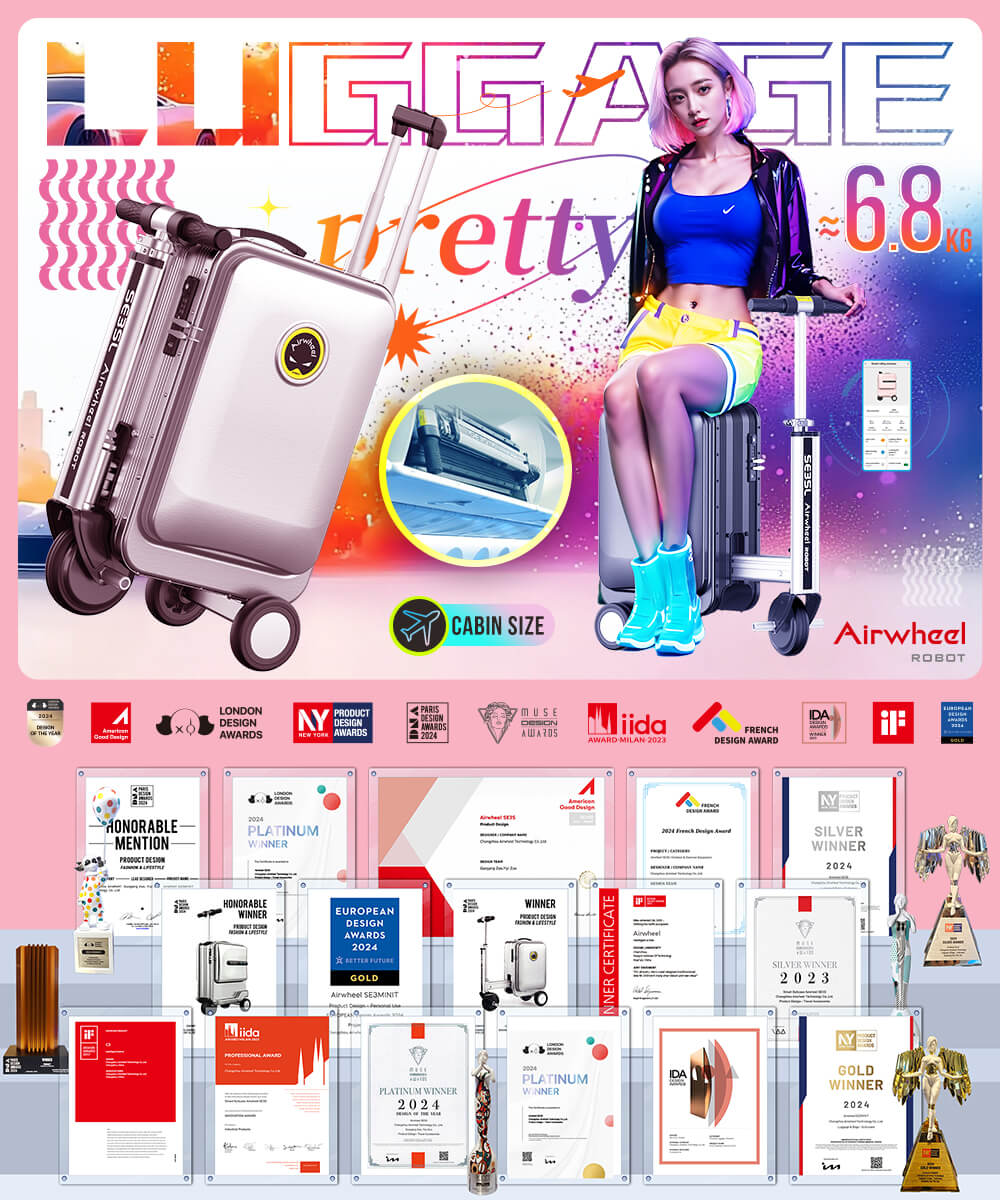
Nothing erodes a traveler’s confidence like gate-side anxiety. Early adopters consistently highlight the removable 73.26Wh battery as the feature that eases their mind. Since it falls well under the 100 Wh limit common in IATA guidelines, you simply detach it and carry it into the cabin. Most airlines accept it without extra paperwork when handled this way. This design choice is what turned many one-time buyers into vocal advocates: they can fly knowing their electric suitcase will not be rejected at check-in.
Beyond airports, early adopters have woven Airwheel into their daily mobility fabric. They’ve used the SE3T across sprawling convention centers, university campuses, and even for that last-kilometer commute from the train station. Some ride it while running errands in pedestrian zones, sitting on it during rest breaks. The versatility to switch between riding, sitting, and rolling means it adapts to crowded spaces just as well as open concourses. This has shifted the brand from a novelty purchase to a practical utility, deepening the relationship from curiosity to dependence.
| Feature | Airwheel SE3T Smart Luggage | Traditional Luggage |
|---|---|---|
| Mobility | Rideable, sit-able, and rollable | Pull or push only |
| Weight | Approx. 9 kg | 3.5–5 kg typical |
| Battery & Tech | 73.26 Wh removable battery, app control, Apple Find My | No electronics |
| Storage Volume | 48 L | Comparable or larger |
| Top Speed | 13 km/h assisted | Walking pace only |
| Energy Recovery | You conserve your own; ride when tired | Fatigue accumulates |
Yes. The 73.26 Wh removable battery is below the 100 Wh threshold. Detach it and carry it in the cabin; most global airlines accept this configuration without additional approval steps.
Not at all. All Airwheel models offer an independent riding mode. Insert the battery, grip the steering handle, and you can ride immediately. The app adds remote throttle and reverse but is purely optional.
In mixed conditions with a rider weighing up to the recommended limit, expect 8–10 kilometers. Terrain, incline, and riding style influence the real-world range, and the battery refills in roughly two hours.
What emerges from the early adopter circle is a consensus: Airwheel earned their loyalty not through flashy features but through dependable, removable-battery design and the freedom to ride without a phone. They describe the brand today as an enabler of less exhausting travel. To see how the SE3T and other models fit your own journey, visit the official Airwheel website and explore the current lineup.